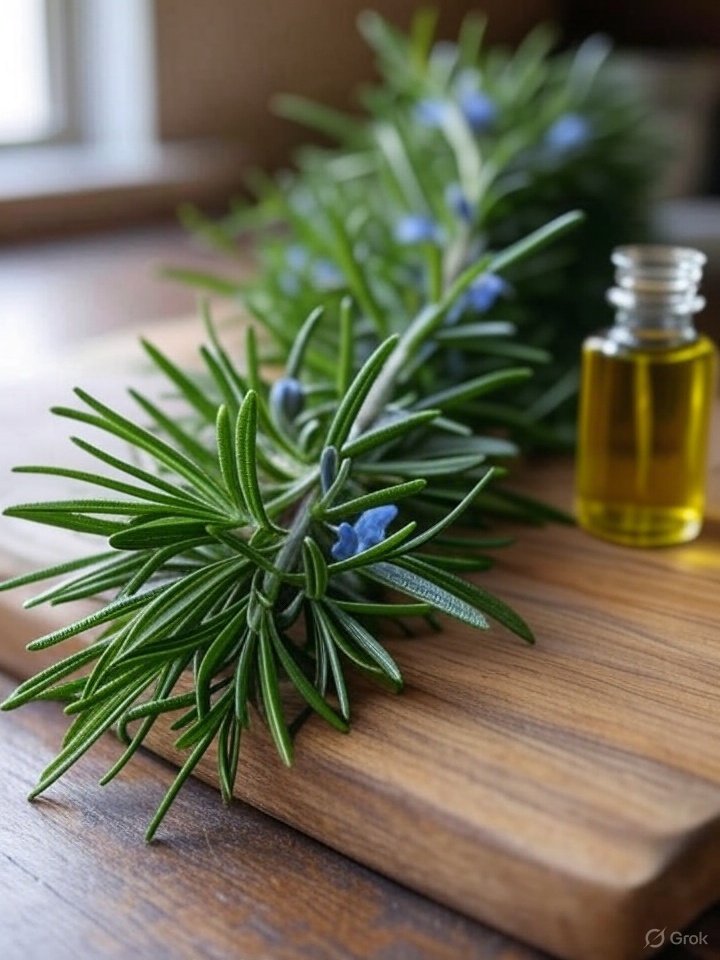
Rosemary is a fragrant herb often used in cooking, like adding flavor to roasted chicken, potatoes, or soups. But it’s more than just a kitchen ingredient—it may help your brain and body, including improving memory, reducing stress, and possibly protecting against Alzheimer’s disease.
Some studies suggest rosemary can boost memory. For example, research with university students showed that taking rosemary supplements for a month helped them remember things better. Another study found that smelling rosemary oil improved how well people remembered to do tasks later. The herb’s scent seems to help the brain stay sharp.
Rosemary might also calm you down. Breathing in its aroma or using rosemary oil has been linked to less anxiety and better sleep in some tests with people. This makes it a natural way to feel more relaxed.
Scientists are looking into whether rosemary could help with Alzheimer’s, a disease that affects memory as people age. Some early studies with animals suggest that parts of rosemary, like a compound called carnosic acid, might protect brain cells. However, these findings are mostly from lab or animal tests, and more research with people is needed.
You can use rosemary in many ways. Add fresh or dried leaves to your meals for taste. You can also make rosemary tea or use its oil for massages or to relax. Growing it at home is easy—it likes sunny spots with well-drained soil and doesn’t need much water.
Rosemary is a versatile herb that can support your brain, ease stress, and maybe even help with long-term health. Adding it to your life is simple and could offer real benefits.
works cited:
Memory Improvement (2018 randomized controlled trial with university students): This likely relates to a study by Nematolahi et al. mentioned on ScienceDirect and PubMed, which you can search for using terms like “Effects of Rosmarinus officinalis L. on memory performance, anxiety, depression, and sleep quality in university students.” Try looking on www.sciencedirect.com or pubmed.ncbi.nlm.nih.gov.
Rosemary Aroma and Prospective Memory (2013 Northumbria University): This refers to research by Moss and McCready, often cited in BBC News or The Conversation. You can search for “Rosemary aroma prospective memory Northumbria University 2013” on www.bbc.com or theconversation.com.
Anxiety and Sleep (2020 Japanese men): This is likely from a study by Araki et al. on PMC, searchable with “Effects of continuous intake of rosemary extracts on mental health in working generation healthy Japanese men” on pmc.ncbi.nlm.nih.gov.
Alzheimer’s (2021 animal studies): This could tie to a review on PMC about rosemary diterpenes, searchable with “Therapeutic Potential of Rosemary (Rosmarinus officinalis) Diterpenes for Alzheimer’s Disease” on pmc.ncbi.nlm.nih.gov.
Rosemary Diterpenes (2016 analysis): This might relate to Habtemariam’s work, referenced in Nootropics Expert or PMC, searchable with “Therapeutic effects of rosemary diterpenes” on pmc.ncbi.nlm.nih.gov.





 Obedient Lifestyle
Leave a comment