Since its initial description back in the seventeenth century, the lymphatic system has probably never received as much scientific attention as during the last decade. It is very important to our bodies that we can’t live without it. It is also an important component of the immune system, which fights infection. For example, one group of white blood cells, the lymphocytes, can live and multiply in the lymphatic system where they attack and destroy foreign organisms that cause harm to our body.
Being the second vascular system found in higher vertebrates in addition to the blood vasculature, it has several vital functions including the regulation of tissue pressure, immune surveillance and the absorption of dietary fat and fat soluble vitamins such as vitamin A, D, E and K from the digestive system and delivers these nutrients to the cells of the body where they are used by the cells. The main function of the lymphatic system is to get rid of cellular waste, for example, when a cell dies, it is the lymphatic systems job to remove it.
Interest in basic lymphatic research was boosted by the growing evidence that the lymphatic system also contributes to a number of diseases, such as lymphedema, cancer metastasis and different inflammatory disorders. The discovery of various molecular markers allowing the distinction of blood and lymphatic vessels, together with the availability of an increasing number of in vitro and in vivo models to study various aspects of lymphatic biology, has enabled tremendous progress in our understanding of the development and function of the lymphatic system.
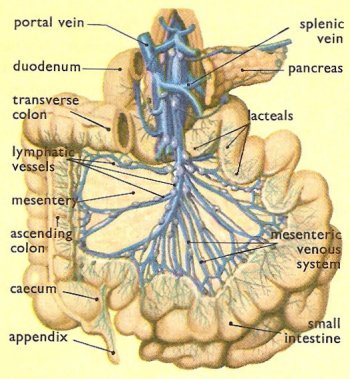
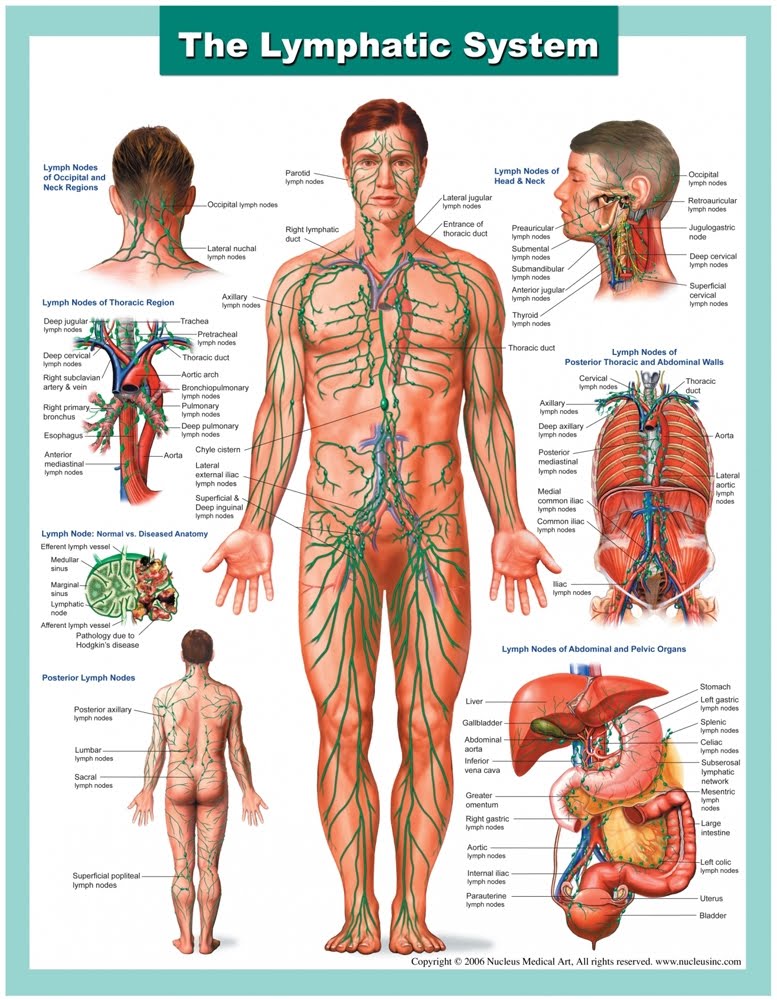
Lymphatic capillaries start blind-ended in the tissue, where they take up lymph, a protein-rich exudate from blood vessels. They are lined by a single layer of overlapping endothelial cells and lack a continuous basement membrane as well as pericyte or smooth muscle cell coverage. Tissue fluid likely enters these initial lymphatic vessels in between discontinuous button-like cell junctions. Via larger collecting lymphatic vessels and ultimately the thoracic duct, it is returned to the blood vasculature through the lymphatico-venous connections at the junction of the jugular and subclavian veins. In the intestine, specialized lymphatic vessels, so-called lacteals, take up dietary fat and fat-soluble vitamins to transport them to the venous circulation. Unlike the blood vascular system, the lymphatic system does not feature a central pump, instead lymph is moved forward by skeletal muscle action, respiratory movement and contraction of smooth muscle in walls of collecting lymphatic vessels.
Besides the vessels, which are found in almost all tissues except for avascular structures such as epidermis, hair, nails, cartilage and cornea, and some vascularized organs including the brain and the retina, the lymphatic system also comprises the lymphoid organs. These include lymph nodes, thymus, tonsils, spleen and Peyer’s patches (organized lymphoid nodules), and are crucial for the immune function of the lymphatic system. Immune cells such as lymphocytes and antigen-presenting dendritic cells are transported via lymphatic vessels from the skin and other organs to regional lymph nodes, where specific immune responses are initiated.
There are hundreds of lymph nodes throughout the body, even in the colon, so it is easy to see why the lymphatic system plays an important role in inflammation and cancer progression. This is why it is important to put healthy foods into our body so we don’t end up with a sluggish lymphatic system. We need it to work correctly so we can avoid the major health problems that an unhealthy lymphatic system leads to.
Scientists have been scrutinizing the links between the state of the human microbiome and the fate of one’s health. There are many factors that figure into any single person’s longevity and lifetime risk for certain diseases. A Greek island called Ikaria in the Aegan Sea don’t have the many modern conveniences of the American culture. Fast food, fruit juice, and soda are highly unusual for them. Their meals consist on mainly vegetables from their home grown islands, local fish and meat, homemade yogurt, nuts and seed and plenty of olive oil. They grow their own herbs for teas, grapes for wine and the air is clean and there’s no pollution. When they get sick they usually use their own herbal methods, like a spoonful of locally produced honey. This island is located thirty miles off the western coast of Turkey. It’s also known as a Blue Zone, a place where people live measurably longer, healthier lives than most of us in the Western developed world. They generally drink wine and coffee daily, stay active long past eighty years old, and remain mentally sharp to the very end. One prominent study found that Ikarian men are nearly four times as likely as their American counterparts to reach ninety often in better health. The study also found that they live up to a decade longer before developing cardiovascular disease and cancers, and they don’t experience nearly as much depression. The rates of dementia in those past eighty five years old are a small fraction of rates of the Americans in the same age group. According to Dr. David Perlmutter, when science settles the score between these two different places and we can tease out the root causes of our health challenges here in the United States, the human microbiome will be at the forefront.
The microbiome is our genetic fingerprint, and is also referred to the genetic make-up of the microbiota: i.e. the genes from all the bacteria, eukaryotes, archaea and viruses in your gastrointestinal tract. The microbiota, refers to the micro-organisms and viruses associated with the human gastrointestinal tract. Being that the microbiome is our genetic makeup, it is very important to pay attention to what we put in our guts, it can be lifesaving.
A Greek physician, also known as the father of modern medicine, Hippocrates, first said in the third century, “All disease begins in the gut.” This was long before civilization had any proof or sound theory to explain his idea. We didn’t even know bacteria existed until the Dutch tradesman and scientist Antoine van Leeuwenhoek looked at his own dental plaque through a handcrafted microscope in the late 17th century and spied a hidden world of what he called “animalcules.” Today he is considered the father of microbiology. In the 19th century it was the Russian-born biologist and Nobel laureate Elie Mechnikov who made a direct link between human longevity and a healthy balance of bacteria in the body, confirming that “death begins in the colon.” Since his discoveries, scientific research is bringing more and more credence to the notion that up to 90 percent of all known human illness can be traced back to an unhealthy gut. It was Mechnikov who said that the good bacteria must outnumber the bad. Also in the second chapter of Genesis in the Bible God talked about what he wanted us to eat. “And God said, Behold, I have given you every herb bearing seed, which is upon the face of all the earth, and every tree, in the which is the fruit of a tree yielding seed; to you it shall be for meat. And to every beast of the earth, and to every fowl of the air, and to every thing that creepeth upon the earth, wherein there is life, I have given every green herb for meat: and it was so.” So even at creation God wanted us to eat healthy, I’ve read the Bible a few times now and I don’t recall God mentioning for us to eat GMO’s or a ton of sugar. Unfortunately, most people today carry around more bad pathogenic bacteria than they should, lacking an abundant and diverse microbial universe within. No wonder we suffer from so many health disorders.
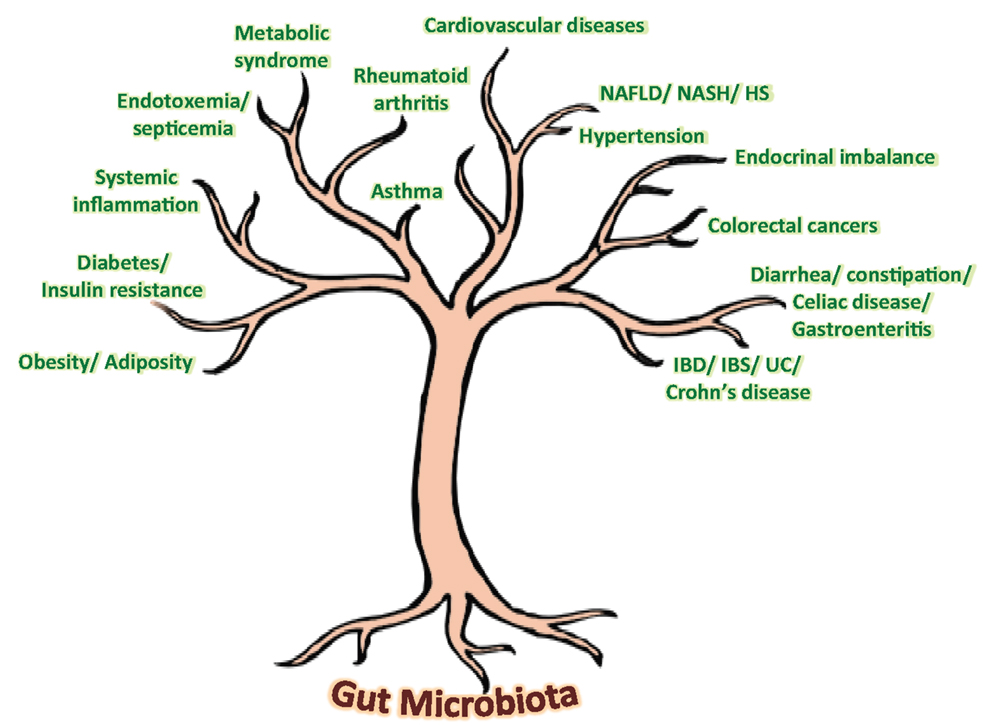
Like our lymphatic system, our intestinal organisms participate in a wide variety of physiologic actions, including immune system functioning, detoxification, inflammation, neurotransmitter and vitamin production, nutrient absorption, signaling being hungry or full, and utilizing carbohydrates and fat. All of these processes factor mightily into whether or not we experience allergies, asthma, ADHD, cancer, diabetes, or dementia. The microbiome affects our mood, libido, metabolism, immunity, and even our perception of the world and the clarity of our thoughts. This is why I believe neglecting our health is really dumbing down America. There is so much evidence out there about the importance of what we put into or on our bodies, and how it improves the health miraculously, yet many ignore it and go after the prescription drugs and chemicals instead. From my experience talking with people about how to better their health hasn’t been very successful. Friends and family tell me that they ate like that for generations and they are all fine so that is why they continue it. They don’t think about the chronic pain, stomach, teeth and mental problems, obesity and all of the other problems that also run in their families for generations. Unfortunately, we all have to learn on our own, if ever. I thank God every day that I learned how to eat right. I also grew up eating unhealthy with lots of sugar and processed foods in my diet, it was normal to us. So was my constant stomach, teeth, skin and ear problems I had growing up, at least that’s what my doctors told me. It wasn’t until my early twenties when I moved back with my parents because my health was declining that I learned how to eat healthy. My parents also learned later in life how to eat healthy, I ate nothing but healthy foods, and zero meat (they are vegetarians). It took about 6 months, but my weight went from 90 to 120 and I was active and feeling the best I have ever felt in my life. It was the first time I didn’t have pain in my stomach when I ate food in years. I understand now how bad my gut bacteria was or lack of it, and why my lymph nodes were always swollen. I believe now that from all of the lack of exercise, processed foods, sugars, prescription pills and living an unhealthy lifestyle damaged my gut and offset my microbiota in a major way.
Having a healthy microbiome is so important to our health, our life literally depends on it. Our gut microbiota, formerly called gut flora, contains tens of trillions of microorganisms, including at least 1000 different species of known bacteria with more than 3 million genes (150 times more than human genes). Microbiota can, in total, weigh up to 2 kg. One third of our gut microbiota is common to most people, while two thirds are specific to each one of us. In other words, the microbiota in your intestine as I said before is like our genetic fingerprint. Taking into account the major role gut microbiota plays in the normal functioning of the body and the different functions it accomplishes, experts nowadays consider it as an “organ”. However, it is an “acquired” organ, as babies are born sterile; that is, intestine colonization starts right after birth and evolves as we grow.
Gut microbiota’s balance can be affected during the ageing process and, consequently, the elderly have substantially different microbiota to younger adults.
While the general composition of the intestinal microbiota is similar in most healthy people, the species composition is highly personalized and largely determined by our environment and our diet. The composition of gut microbiota may become accustomed to dietary components, either temporarily or permanently. Japanese people, for example, can digest seaweeds (part of their daily diet) thanks to specific enzymes that their microbiota has acquired from marine bacteria.
Although it can adapt to change, a loss of balance in gut microbiota may arise in some specific situations, like Dysbiosis. Dysbiosis may be linked to health problems such as functional bowel disorders, inflammatory bowel disease, allergies, obesity and diabetes. Research has uncovered an intricate web connecting our gut flora to virtually every process in our body, including immune health, psychological well-being, and some of the deepest chronic health issues of our times. You can find the microbiota in the mouth, skin, lungs, vagina and stomach. And according to research done by University of Oregon, when we leave a room there is evidence in the air of us being there from our microbial signature floating in the air like a cloud, so basically they discovered a cloud of microbiota floating around each person. Like our lymph nodes, microbiota has a major effect on our bodies, this is why is it so important to pay attention to how we live our lifestyles.
Stress is also a major cause of health problems in the gut. Stress, which is defined as an acute threat to homeostasis, shows both short- and long-term effects on the functions of the gastrointestinal tract. Exposure to stress results in alterations of the brain-gut interactions ultimately leading to the development of a broad array of gastrointestinal disorders including inflammatory bowel disease (IBD), irritable bowel syndrome (IBS) and other functional gastrointestinal diseases, food antigen-related adverse responses, peptic ulcer and gastroesophageal reflux disease (GERD).
The major effects of stress on gut physiology include:
1) alterations in gastrointestinal motility;
2) increase in visceral perception;
3) changes in gastrointestinal secretion;
4) increase in intestinal permeability;
5) negative effects on regenerative capacity of gastrointestinal mucosa and mucosal blood flow
6) negative effects on intestinal microbiota.
Mast cells (MC) are important effectors of brain-gut axis that translate the stress signals into the release of a wide range of neurotransmitters and pro-inflammatory cytokines, which may profoundly affect the gastrointestinal physiology. IBS represents the most important gastrointestinal disorder in humans, and is characterized by chronic or recurrent pain associated with altered bowel motility.
According to a neuropsychologist Jennifer Wolkin, In light of this new understanding, studies have shown that patients who tried psychologically based approaches had greater improvement in their symptoms compared with patients who received conventional medical treatment.
Along those lines, a new pilot study from Harvard University affiliates Benson-Henry Institute for Mind Body Medicine at Massachusetts General Hospital and Beth Israel Deaconess Medical Center found that meditation could have a significant impact for those with irritable bowel syndrome and inflammatory bowel disease. Forty-eight patients with either IBS or IBD took a 9-week session that included meditation training, and the results showed reduced pain, improved symptoms, stress reduction, and the change in expression of genes that contribute to inflammation.
Many studies have demonstrated the beneficial effects of prebiotics and probiotics on our gut microbiota. Serving as “food” for beneficial bacteria, prebiotics help improve the functioning of microbiota while allowing the growth and activity of some “good” bacteria. Present in some fermented products such as yogurt, probiotics help gut microbiota keep its balance, integrity and diversity.
Thanks to technological progress, the picture of the bacteria living in the gastrointestinal tract is becoming clearer. Researchers now use a range of techniques, including the tools derived from molecular biology, to further clarify the mysteries of microbiota. While there are still some things that are yet to be discovered, more and more findings are being presented every day.
In order to stay healthy and keep our body functioning correctly we need to change our lifestyle to a more active healthy one. We have to keep our lymph moving forward, our guts fed with healthy nutrient filled foods and a peace of mind so we can live long happy disease free lives. Like Dr. Gloria Gilbere says, be your own health detective and read labels. Your health depends on it.
WORKS CITED
Asellius G. De lactibus sive lacteis venis. Mediolani; Milan: 1627.
Baluk P, Fuxe J, Hashizume H, Romano T, Lashnits E, Butz S, Vestweber D, Corada M, Molendini C, Dejana E, Mc-Donald DM. Functionally specialized junctions between endothelial cells of lymphatic vessels. J Exp Med. 2007;204:2349–2362.
Cueni LN, Detmar M. The lymphatic system in health and disease. Lymphat Res Biol. 2008;6:109–122
Perlmutter MD,David, Brain Maker.New York 2015
Thompson J,Manore M,Vaughan L. The science of nutrition.2014
Hoeger W,Hoeger S. Lifetime Physical Fitness & Wellness. 2013
Gut Microbiota Worldwatch, Gut Microbiota Info.
Sanders, Mary Gut microbiota for health, Probiotics Twelve Years Later. 2014
Handwerk, Brian. “You Produce a Microbial Cloud That Can Act Like an Invisible Fingerprint”. Retrieved 2015-09-27.
Department of Medicine, Thuringia Clinic Saalfeld, Teaching Hospital of the University Jena, Germany. pkonturek@thueringen-kliniken.de





 Obedient Lifestyle
Leave a reply to Ulcerative Colitis | ObedientLifestyle Cancel reply